Introduction
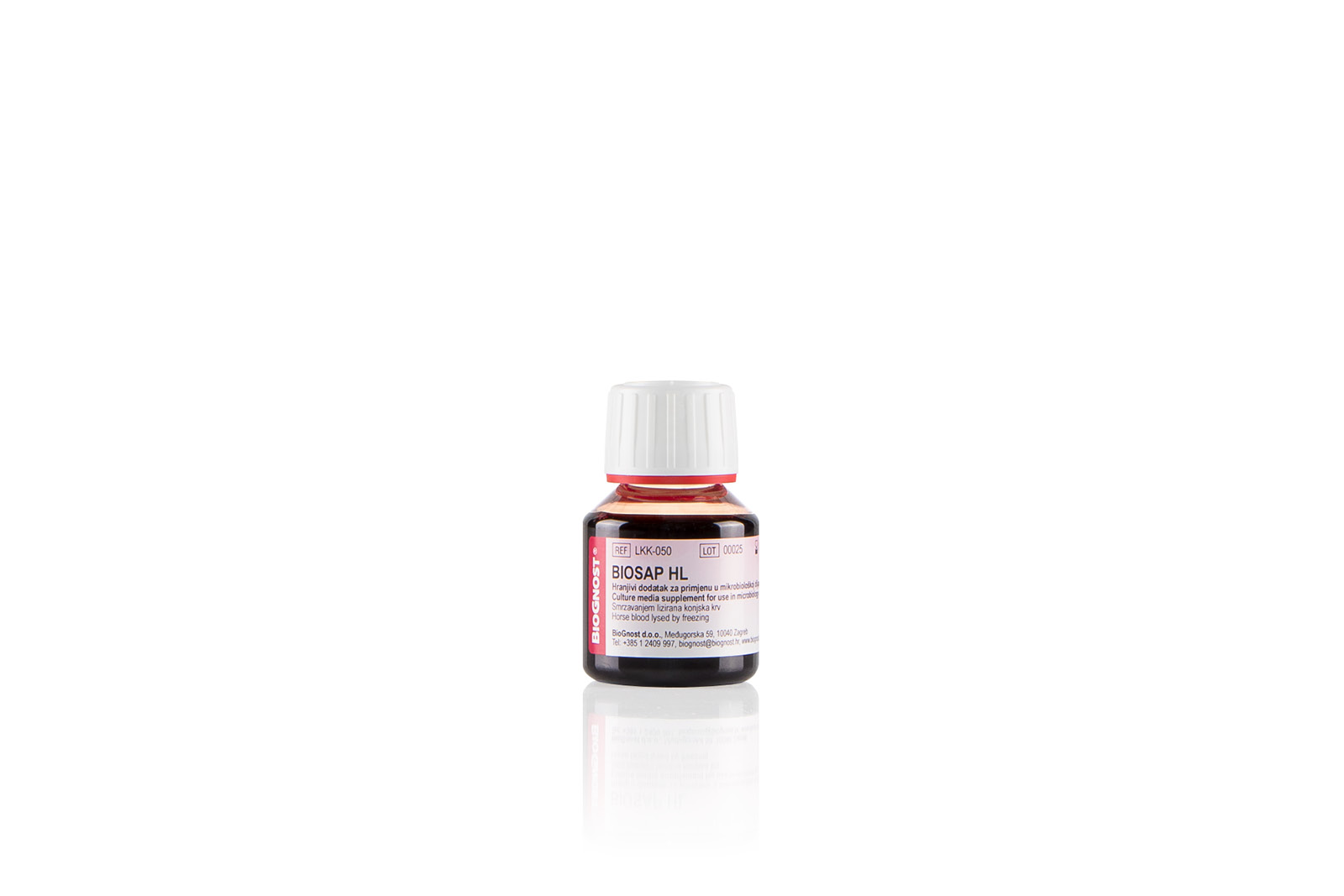
In vitro hemolysis is the destabilization of the erythrocyte structure by freezing or adding 10% saponin, which results in the release of cellular components (hemoglobin, heme, nicotinamide adenine dinucleotide coenzyme, thymidine phosphorylase enzyme) into the surrounding fluid, as well as changes in blood color to dark purple and dark red.
Technical Data
The product is used as a supplement to culture media to stimulate the growth of microorganisms that require hemoglobin, including Campylobacter spp., Corynebacterium diphtheriae, Staphylococcus spp., and Clostridium spp.
It is widely used in the preparation of selective media, including Campylobacter Enrichment Broth (Bolton Broth) for isolating Campylobacter species from clinical specimens and Hoyle’s tellurite agar (Hoyle Medium Base) for the isolation and differentiation of Corynebacterium diphtheriae types. In both media, enrichment with 5% lysed horse blood is recommended by the manufacturer.
Lysed horse blood stimulates growth of Haemophilus influenzae and Neisseria gonorhoeae due to the release of nicotinamide adenine dinucleotide from ruptured erythrocytes and is used in the preparation of GC Agar Base.
In antibiotic susceptibility testing, lysed horse blood is added to the media to improve the reaction with trimethoprim and sulfonamides.
Preparing the sample:
Leave the bottle at room temperature for 5-10 minutes and gently stir the bottle. Sterilely transfer the appropriate volume of the supplement into the medium cooled to 45-50°C (according to the media manufacturer's instructions).
Storing, stability and expiry date:
Keep BioSap supplements in a closed original packaging at temperature of 2°C to 8°C. Do not freeze and avoid exposing to direct sunlight. The products must not be used after the date printed on the label. Date of manufacture is stated in the product's certificate delivered with each new lot.